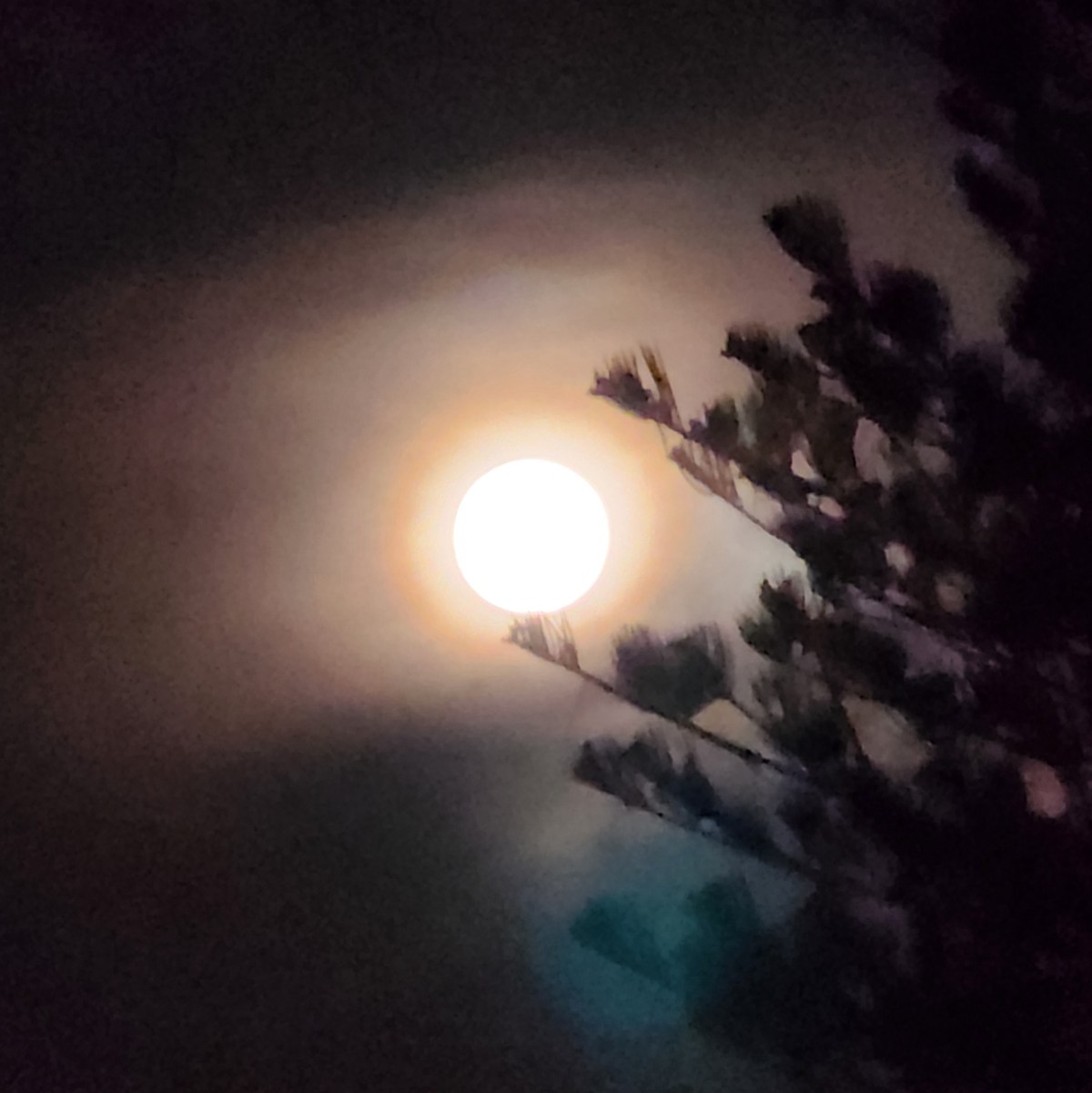
Celebrating Nature’s Dates and Lunar Cycles

The sun will arise later this morning than it will any other day of the year.

But not yet. Only a few streaks of orange are colouring the early sky.

It’s the Winter Solstice in Australia.

Winter may be all cosy fires and hot soup, but I’m not a fan of dark mornings and early evenings. Today, in the Southern Hemisphere, we’re now tilted furthest from the sun. From today, even though the daily temperatures will continue to fall, at least the sun will shine for a little longer each day. We’re starting our tilt back towards summer.

Another year has passed.

I acknowledge the Winter Solstice like others celebrate New Year’s Day. For me, it’s a time to plan for the coming year. Today, I’ll prepare some of the garden beds, ready for the planting. Other beds are already flourishing with winter crops now well established.
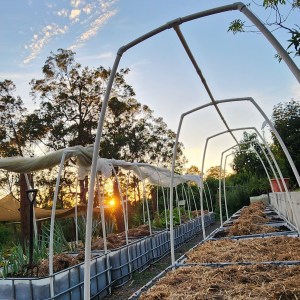
Rows of garden beds ready for winter planting with sunrise in the background
Garden beds ready for winter planting

I’m more connected to nature’s sequence – the Solstices, Equinoxes, and lunar cycles – than dates on the calendar. Not everyone is, of course. I once worked for an accountant, and for him, New Year’s Day was 1st July. The first day of the financial year in Australia. Anthony the Accountant celebrated with a day off and a new financial year diary.

For me, the full moon is more noteworthy than noticing in my diary it’s the first day of the next month. It does help to live away from the night lights of the city.
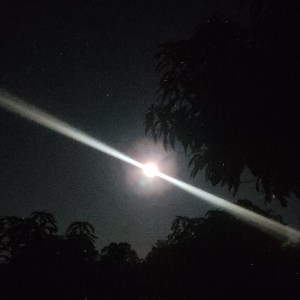
Bright white moon in a dark sky with light glare and tree silhouettes.
Full moons shine bright in dark country skies

Some witchy woo-woo types align with the monthly moon cycles and consider the new moon the start of each month. As the new moon waxes and builds in power, it’s a time to start new projects and take new directions. After the full moon, as the moon wanes and falls away, it’s a time to let go of things that don’t serve us well. I don’t know if there’s any truth to this lunar energy theory, but it seems like a way to live mindfully.

Does the full moon hold a special power for setting intentions, and does it affect us by drawing the water in our bodies as it draws the tides in the ocean? I don’t know.

I do know, however, the bright light of the full moon makes it harder to sleep. I understand how earth-centered and ancient cultures might have sat up for hours by a full moon campfire,  or danced around it.

To bathe in the light of the full moon is invigorating. The light feels cool, clear, cleansing and powerful. Last month, I sat in a steaming outdoor hot tub with light from a full moon illuminating me. It was a time for reflection and appreciation.
A women's face in near darkness, illuminated by moonlight.
Bathing in moonlight

One lunar ritual I do ascribe to is putting my bowl of crystals beneath the full moon for an energetic cleansing. (I also rinse the dust off them at the same time, which is possibly the real cleansing they receive.) I don’t really believe the crystals hold any special powers beyond being a pretty collection I’ve built over time, but this ritual acknowledges time passing and the trinkets from Mother Earth.
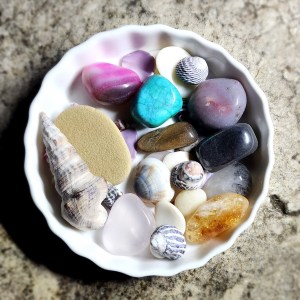
A bowl of crystals and shells to be placed under a full moon for energetic cleansing.
Crystals and shells – trinkets from Mother Earth

Did you pause to notice the Winter Solstice this year, or the Summer one if you’re in the Northern Hemisphere? Or are you more attuned to the passing of the days and months in your calendar, like Anthony the Accountant?
Feathered families – friendships with magpies

Instead of making my morning coffee as I lay in the caravan bed, my husband was lingering outside the open door.

Was he waiting to talk to one of our camping friends returning from a walk?

Suddenly, he crooned with a sing-song lilt, “Oooogle oooogle woooogle oooogle.” And I knew he was talking to … a magpie.

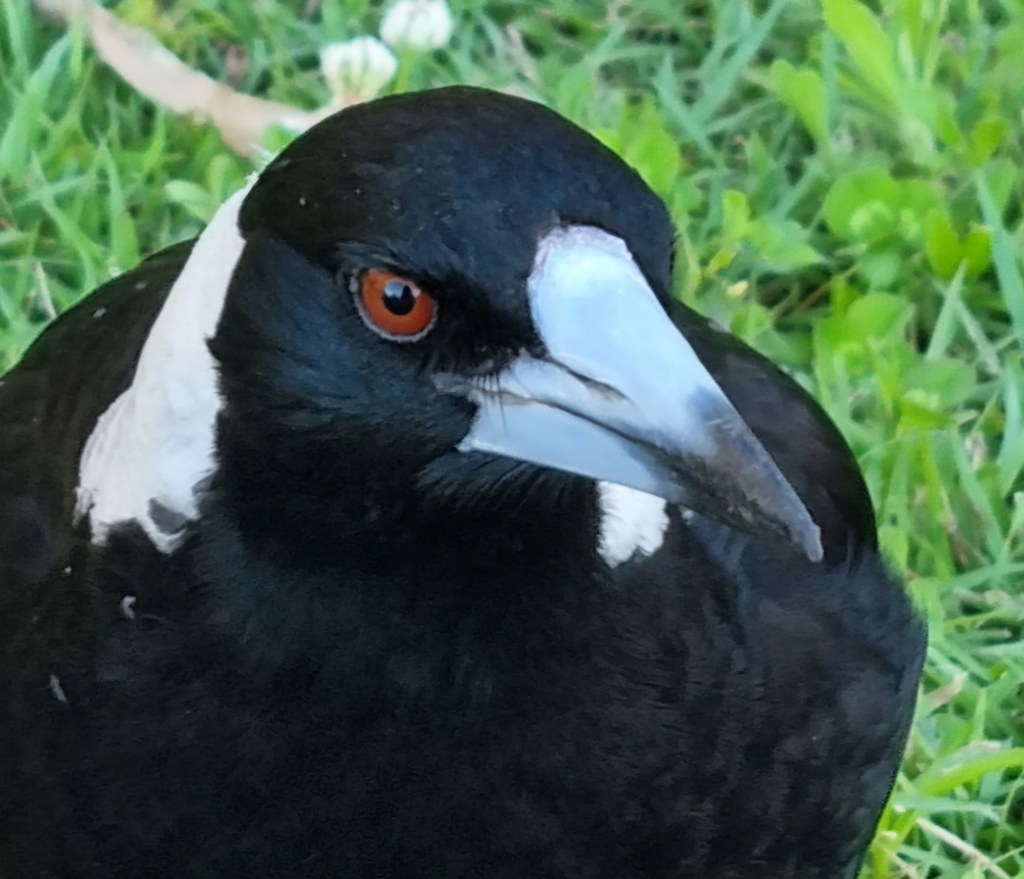
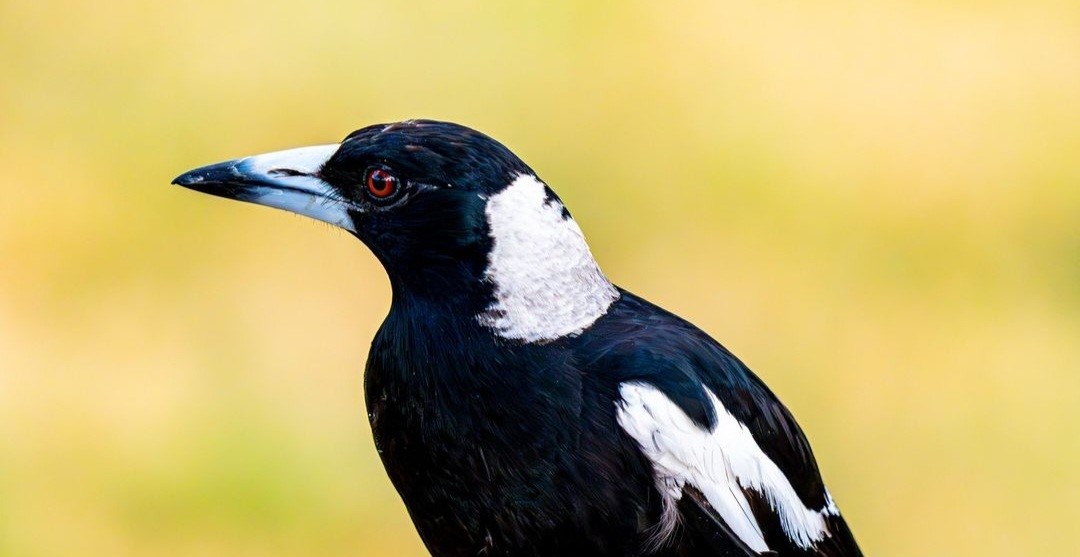
Wild magpie bird in Australian garden

We have magpies around our new home in the country, but they are aloof and independent. They don’t drink from the bird bath. Or follow us on the lawn mower like the butcher birds do, feasting on easy meals of crickets and tiny lizards.

When we moved into their territory, we were glad to find the magpies here are not in the small minority who swoop people they don’t know during nesting season … because it was nesting season.

Magpies can apparently recognise at least 500 different people. So we walked around with uncovered faces so they’d get to know us. And they’ve ignored us ever since.

Maybe country magpies are just too busy. Their city counterparts will give you the time of day on the back deck.

At my parent’s house in the city suburbs, magpies share their mornings.

Mr and Mrs Maggie know once the jug is set to boil for coffee, it’s time to make meaningful eye contact through the back window. A tiny portion of mince will be provided.

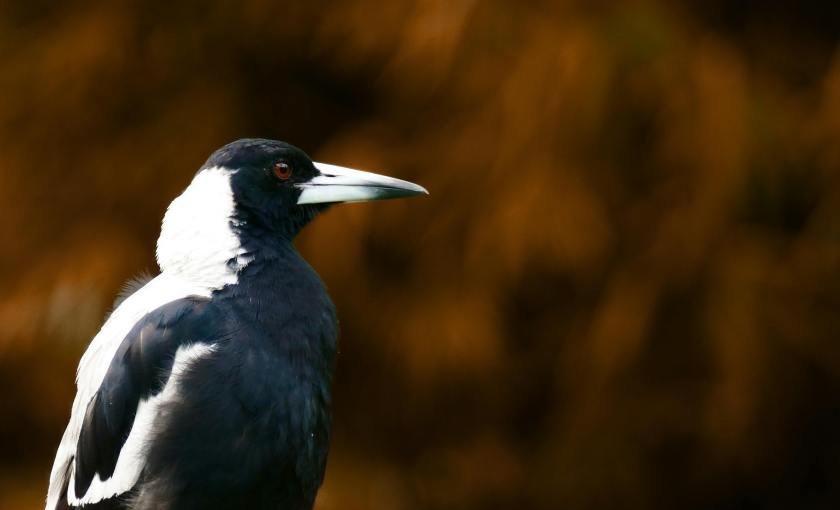
Mrs Maggie (females are mottled black and white behind their neck) knows the mince is kept in the fridge. There was that one morning when the screen door hadn’t closed, so she popped in and sat on the fridge, tapping a toe impatiently.

Magpies are known to live to 25 years, and Mr and Mrs Maggie are at least that.

My parents still remember the initial privilege of Mr and Mrs Maggie first introducing a fledgling nearly three decades ago. They’ve met a new fledgling every year since.

Australian wild magpie bird in garden

Each year, before the new chick arrives, there’s a gruesome period when Mr Maggie drives the adolescent chick from the territory. Many times, he’s flipped a reluctant son over on his back, with a peck that can draw blood.

One year, a departing son had the original idea of coming to the front door and knocking, while his parents were out the back. Kudos for ingenuity, but my mum and dad reinforced the wishes of Mr Maggie – it was time for the son to search for a home of his own.

Raising a fledgling is quite the commitment for magpie parents. For several months after leaving the nest, chicks need instruction on finding food, flying, and social etiquette.

It takes two adult birds to raise each fledgling. Mr and Mrs Maggie consistently raise one chick each year. Except for that wet and productive season, when grubs and earthworms must have been prolific. Mr and Mrs Maggie knew it would be a favourable season. They allowed their adolescent daughter to stay as an ‘Aunt’. That year, the three adults worked together to raise two fledglings.

Australian magpie bird in bush

Magpies have many of the same neurotransmitters as we do – including dopamine, serotonin, and oxytocin. They experience emotions, including affection, playfulness, grief, and deceit. They play hide-and-seek like a five-year-old child.

Mr and Mrs Maggie deserve a huge amount of respect. They are within the 10% of magpies who reproduce in any year.

Only 25% of magpies will have the opportunity to raise a chick during their lifetime. This is due to the difficulty of finding a long-term partner and suitable territory. Also vital is the communication skills needed to form working relationships with magpies from neighbouring territories. This cooperation allows joint defence against outside threats such as eagles, goannas, and cats.

Today, my mum rang in tears. Mr and Mrs Maggie haven’t been seen for a week.

A great flock of white cockatoos, with all their screeching and chaos, had taken up in the small park next door.

We are all hoping that normality soon returns. That tomorrow, after seeing the jug set to boil, Mr and Mrs Maggie perch on the back rail, make eye contact, and ask for a breakfast treat.

Next time you see a magpie who’s willing to give you the time of day, remember they could be 30 years old, with wisdom and life experience. Remember, they’re intelligent and emotional. With highly refined communication skills.

Remember to say “Oooogle oooogle woooogle oooogle.”

Wild Australian magpie in garden with two lorikeets
Mr Maggie injured a leg 10 years ago, but he’s still doing well

References:
Podcasts
https://www.abc.net.au/listen/programs/conversations/talking-magpies-grieving-tawny-frogmouths-and-canny-galahs/103170988?utm_content=link&utm_medium=content_shared
https://www.tunefm.net/2024/02/02/une-emeritus-professor-gisela-kaplan-named-honorary-member-of-the-order-of-australia/
https://www.everand.com/podcast/590594548/What-makes-Australian-birds-so-smart-Gisela-Kaplan-Rebroadcast
Book
Australian Magpie: Biology and behaviour of an unusual songbird, Prof Gisela Kaplan, 2010

Cohabitating with nature

After my panicked phone call, the snake-catcher turned up – in shorts and thongs.

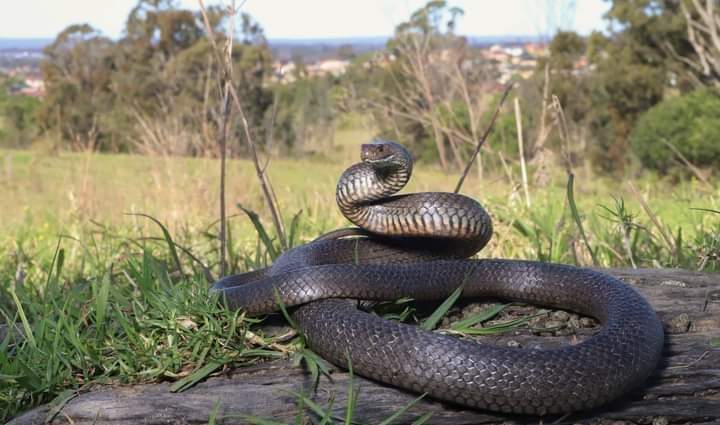
“I thought it would be a tree snake,” he said, looking at the photo I’d snapped of its disappearing tail an hour earlier – after it had slithered past my bare feet. “But that’s an Eastern Brown. I’ve never seen one around here.”

I checked in with my nearest neighbour. “Oh, really?” she said. “An Eastern Brown? I don’t remember the last time we saw one of those.”

Eastern Browns are the second deadliest snake in the world. I hope it’s gone from beneath my back stairs.

“The only way to know for sure it’s gone is to pull apart the whole staircase,” the snake-catcher said, helpfully.

That would be a full-day’s work. Plus, as Hubby estimated, three more days to put the staircase back together.

“You can live with a snake around,” said the snake catcher, “just be careful where you put your feet.”

A friend asked that night if I’d totally freaked out. I hadn’t, not immediately. Time had stood still. Then, after both the long, silent moment, and the long, silent snake, had passed me by, I’d screamed. Then, gasping, and with shaking fingers, frantically and repeatedly tried to send a text off to hubby who was slashing grass down by the dam.

I’d read that if a snake approaches you, stand still and let it pass. Ironically, in my frozen panic I’d done just that. The snake had flicked its tongue, tasted my presence in the air, then languorously turned away. Its scaly shimmer slipped soundlessly beneath the wooden step, right by my feet. I finally breathed again, into the silence. Silence, like nothing out of the ordinary had just happened.

“What are you going to do now? Do you regret moving to the bush?” My friend questioned that night, perhaps horrified and fascinated because she, too, had recently moved from the city.

“Well, I wish my husband would keep the back door closed!”

Hubby had tried to soothe me, saying snakes don’t go inside.

They bloody might. Why wouldn’t they, when it’s cool and quiet in the middle of the day. When we’re using the mower on the back lawn, stamping around and dragging pot plants about?

My husband’s behaviour didn’t change at all. Still walking around in bare feet. Me, in comparison, for the first whole week ‘post-snake’, chose knee-high gumboots to accessorise my usual sarong when venturing down the stairs to the spa at night. I also spent three days stomping up and down the stairs in work boots and jeans, generally creating as much ruckus as possible.

A week later and we hadn’t seen the snake again. I sought the advice of the experts on the Australian Snake Identification, Education + Advocacy Facebook group.

“Is it likely the snake has moved on?”

“To be sure, you should replace the wooden deck and staircase with concrete,” was the advice. “You have chickens which attract rodents, which attract snakes. You have water, frogs, and a safe space for snakes to hide and hunt. But remember, Eastern Browns don’t like movement. They’ll get out of your way before you even know they’re there. Just look down before you step down. It is possible to cohabitate with them.”

Cohabitate with the second deadliest snake in the world?

Remodelling the back deck and stairs IS on the renovation list – somewhere between the priorities of fencing, more water tanks, retaining walls and building another shed.

I now know snakes are definitely around, instead of possibly around. I’ve also learnt they don’t chase you. Just look out for them, and don’t step on them.

Life continued for another week.

I now look down before I step down. I’ve calmed down. I’ve reverted to wearing thongs outside.

Then, yesterday, as I looked down, a scaly scurry. Something half-seen slipped from the sunny step beneath my feet. A huge blue tongue lizard.

Another question for the Facebook snake advocacy group.

“There’s a big blue tongue living right where the Eastern Brown was. Does this mean the snake has moved on?”

“Possibly,” was the reply, “but not necessarily. Eastern Browns and Blue Tongues can cohabitate quite happily.”

I may be cohabitating with a snake. And a Blue Tongue.

Photo credit: Shane Walsh, who takes wonderful photos and advocates for cohabitating with wildlife.

Notes:

Even if we are cohabitating, we are never going to be friends. There’s a snake bite kit handy, just in case.

For international readers, ‘thongs’ in Australia generally means ‘flip flops’.

Winter is when I say it is

 ‘Winter doesn’t start on the first of June. It starts when I say it does’, said Mother Nature, as she handed down the coldest May on Australian record.

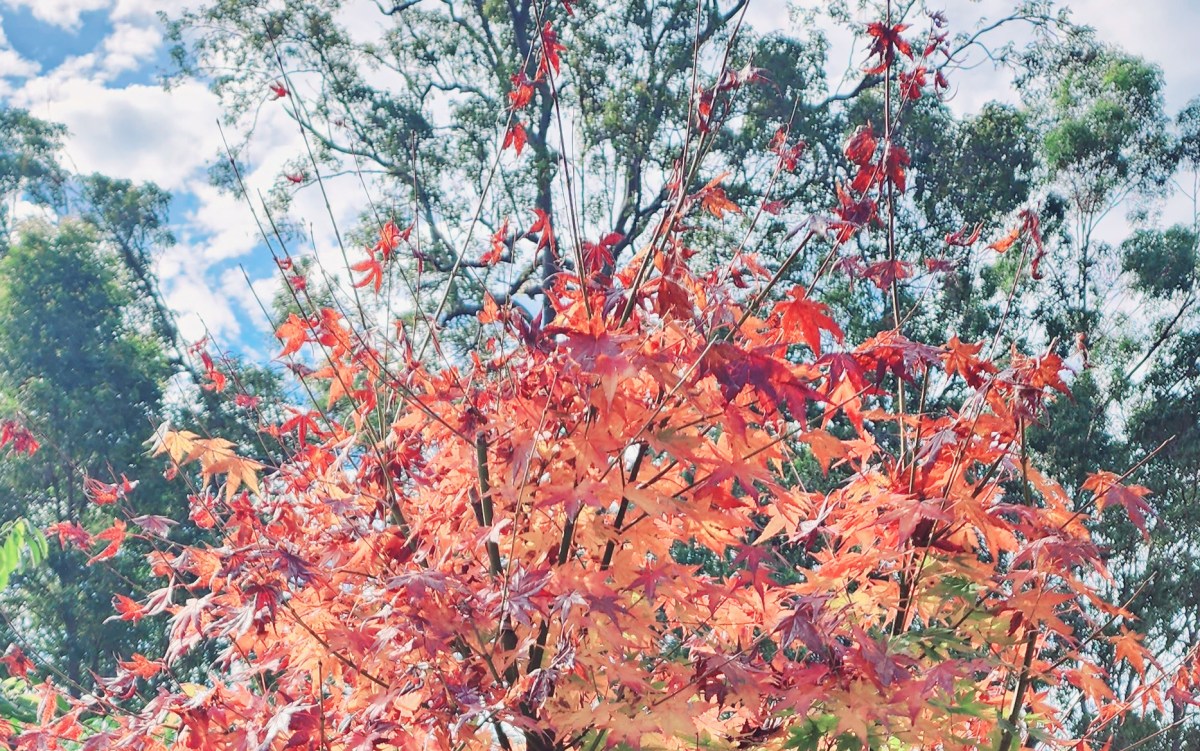
Now it’s July – midwinter. The magnolia tree by the back deck is completely bare of leaves and in its dormant state. The tree had been showing me for many weeks that this year, winter was coming early. Yet I remember standing in the hot sun, looking at its yellowing foliage and wondering if it needed more nitrogen. I’m a long way from being in touch with nature’s cycles.

If I’d observed the tree more closely, I’d have known a cold snap was coming. The hints to buy firewood, unpack ugg boots and winter clothes were missed. Are there other tasks we should have completed on the property before winter? Pruning, mulching, fertilising? Are the mango, macadamia, custard apple, fig, orange, loquat and pomegranate trees calling for something we’ve neglected to provide? Hopefully they’ll all survive another season as we learn to fall in step with their needs.

Connecting with the seasons is one of the reasons I moved to the country. To know a small parcel of earth. To leave that patch healthier than when we started – more able to sustain us and provide habitat for wildlife. To give back in a small way to Mother Nature.

It’s our second winter and I’m noticing similarities with last year – my start to understanding the seasons.

The raucous screech of the yellow-tail black cockatoos is less frequent – they’ve depleted the casuarina (she oak) cones down in the gully behind the back fence, and our neighbour’s supply of macadamia nuts. I love these majestic birds and we’ll definitely plant more food sources for them in years to come.

There was koala scat under the trees near the front gate. It’s not yet their mating season and without hearing their guttural, rumbling brays l forget they may be here year-round.

Like last winter, half-eaten figs scatter the ground, suitable only for composting. The king parrots get to the fruit long before us – I see them feasting from the loungeroom window. We’ll never score more than a couple of the juicy delights, but the parrots are beautiful. Loosing fruit to wildlife is known as ‘Bush Tax’, and like making payments to the Australian Taxation Office, there’s an inevitable contribution.

In the bottom garden the sweet potato vines (yams) are dying back and its nearly time to pull the tubers. For the second year, this will be a major winter harvest for us, along with citrus. Both the Valencia and Naval oranges are ready for picking – two more trees that luckily thrive on neglect.

Starting a gardening diary might help me understand the cycles – what’s planted where and harvested when. Year-to-year this would just be a guide though, as Mother Nature’s sequences don’t always fit neatly into the months allocated to seasons.

My permaculture teacher suggested tuning into seasonal changes, rather than gardening by calendar. He starts each day just wandering around his property, observing. He listens to Mother Nature’s whispers.

Even though it’s mid-winter, today on the afternoon breeze a sweet breath of Spring brushed my cheek. The idea of sipping cocktails during a warm sunset, rather than cosying near the fire, seems a pleasant possibility. Is this the first indication of the next season, an early Spring?

But before cocktails and warm afternoons, there’s lots of work needed to ready the garden for planting next season’s beans, corn, potatoes, pumpkin, tomatoes and zucchini.

I need to be ready because spring may not arrive on the first of September. Spring will be here when Mother Nature says it is.

Appreciation art Australia Beach Birds Bushfire christmas cooking Country life Family food Friends full-moon Garden GardenBirds Garden birds Gardening Happiness Health holiday holidays Home Life lifestyle Mindfulness Monthly journal moon Moving house Moving to the country Nature New home Permaculture Personal development spirituality Sustainability traditions travel Treechange Wildlife Witch WordlessWednesday Writing