October 2025: reviews, experiences, and happenings on the farm

Read – The Watervale Ladies’ Writing & Firefighting Society by Mette Menzies

This book has three elements important to me right now – friendships, writing groups and preparing for a potential bush fire. (Let’s hope I don’t have to fight a fire like the resourceful women in this book.)
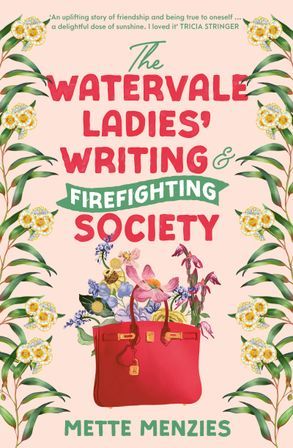
Four women, with a variety of ages and backgrounds, join a writing group in an Australian country town. They soon find themselves besieged by issues including a land grab by big business and dastardly deeds by crooked lawyers and journalists.

The women are all facing various challenges and life transitions. Soon the pressures lead to friction in the group. Can they find the courage to question and prioritize what’s important in their lives? Will they find forgiveness for themselves and each other?

Importantly, the women are lucky enough to find great food and coffee in the township while they face these other hardships. This is worth celebrating in rural Australia.

The Watervale Ladies’ Writing & Firefighting Society was laugh out loud funny in places, with a romance thrown in.

WatchedSlow Horses (Apple TV)

In the industry, ‘Slow Horses’ is a derogatory name for this team of supposedly failed secret service agents. A team that usually manages to outsmart and embarrass England’s intelligence agency elite.

The show mixes thriller, drama, comedy and black comedy genres.

Jackson Lamb is the team’s boss. He’s both obnoxious and endearing. There’s multiple Reddit threads dedicated to his hilarious one-liners which get better with each new season.

There’s a sneaking mutual respect between Lamb and his team, even though he constantly belittles them. Many of the Slow Horses show symptoms of unprocessed trauma. A feature of the show is how they support each other through professional and personal challenges.

Live – Take me to the river

The river bank is still scarred and eroded, still littered with fallen trees and debris in places. Our community is still struggling to recover from the 1-in-500 year flood we suffered earlier this year.

This made the Take me to the River cultural riverside walk with a local historian and Aboriginal Elder all the more beneficial.

We learned our region was named by the Governor of the Bank of England who had never been to Australia. The local Aboriginal people refer to our region as ‘the place of the big hollow’ which indicates both the land’s fertility and propensity to flood.
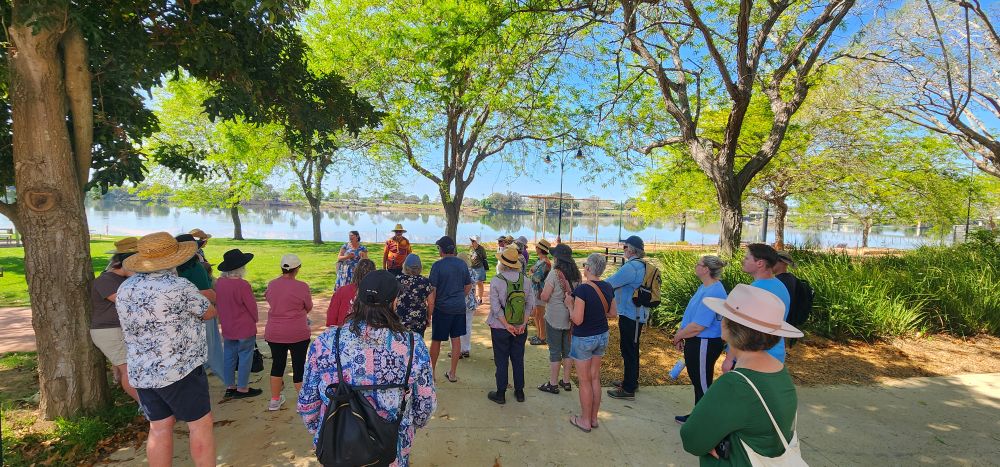
The highlight for me was hearing a very recent Indigenous story. Over 1,000 members of the Aboriginal community came together to perform a dance to heal the land in December 2019. This followed four years of terrible drought, followed by the worst bush fires in Australia’s history.

After hours of traditional music and dancing in the sand, their feet found the fresh water  beneath. A flock of yellow-tail black cockatoos soon landed nearby. These prehistoric-looking magnificent birds are considered to signal coming rain. It did rain soon after, and the drought was declared over in February 2020.

October farm happenings

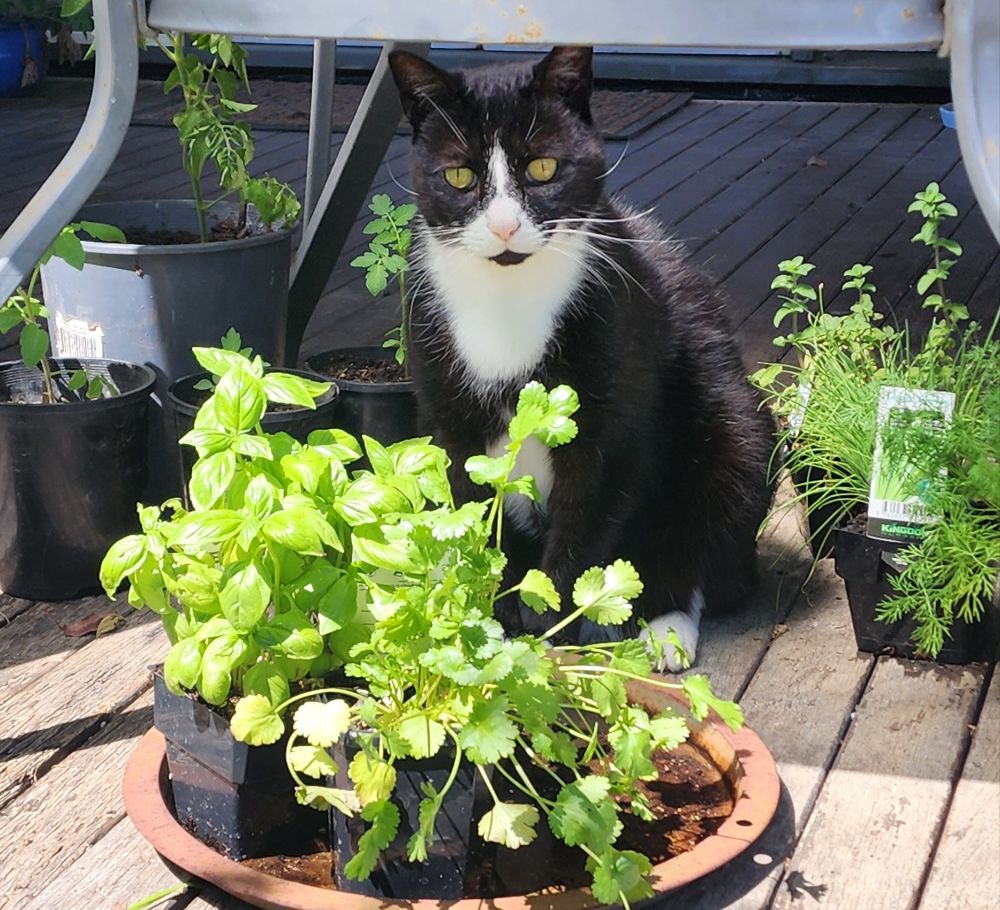
It’s spring, which means lots of seedlings to plant for summer crops. Herbs were one of the first to go in. Charlie, loves helping in the garden.
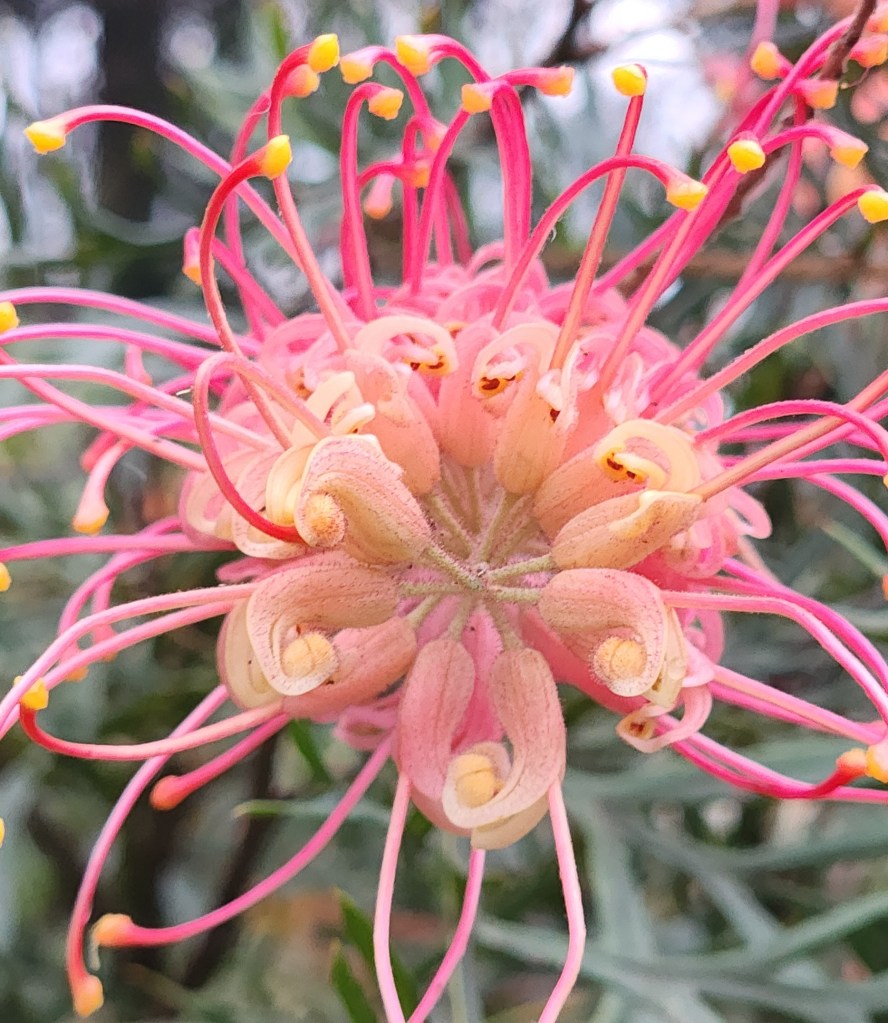
Over the past four years we’ve planted lots of Australian native plants. We’re now getting to enjoy both the blooms and the bird life they attract.
More from the journal next month.

June 2025 – in review

A month of books, TV, movies, performances, happenings on the farm.

Read – Some Day is Today by Matthew Dicks

Have you noticed I’ve hardly blogged over the past few years? Well, this post is my second in two weeks (not six months). I’m on a roll.

Reading Some Day is Today is the kick up the pants I needed to get writing and put it out there.

If you have a desire to create, there’s no excuse.

Author Matthew Dicks is known as an epic storyteller. He’s nerdy and eccentric, but successful in following his passion. He’s both relatable and inspirational.

Some Day is Today is full of interesting anecdotes about how Matthew overcame challenges. He organised every aspect of his life to achieve his creative and life goals. There’s advice on career choice, decision-making, relationships, and time management right down to minutes taken to unpacking your dishwasher.

Narrated by the author, it’s an easy and engaging listen on Audible or Spotify.

WatchedMurderbot (Apple TV)

A TV adaptation of the science fiction series by Martha Wells (comedy/action/sci-fi).

I’d never read a science fiction book. I asked hubby for a recommendation, as he only ever reads this genre. He suggested Martha Wells’ The Murder Bot Diaries. Immediately engrossed, I marathon-read the entire series. So, I was excited to get into Murderbot when it came out on Apple TV.)

The protagonist, who calls ‘itself’ MurderBot, is a rogue, but benevolent, ‘self-governing’ security unit. A ‘synthetic’. It’s assigned to guard a team of human researchers somewhat naive to the realities of a universe of exploitable resources. Observing its charges, MurderBot grapples to understand human nature with all its messiness, duplicity, desire and emotion. Trouble usually ensues when MurderBot indulges its addiction of sneakily binge-watching its favourite human soapie TV series, Sanctuary Moon. This provides MurderBot with more questionable insight into the nature of humanity.

Light-hearted in bite-sized episodes.

Cinema – The Salt Path

Based on a true story by author Raynor Winn, this movie stars Gillian Anderson and Jason Isaacs.

The couple are beset with challenge and heartache. They’ve lost their home and livelihood, and the husband was diagnosed with a terminal illness. So they set off on a yearlong hike around the wilds of coastal south-west England. Why wouldn’t you?

Bleak and desperate are two words I’d use to describe the first half of this movie. There were a few lighter moments and the cinematography is glorious.

The Salt Path is about bravery, overcoming challenges, and most importantly identifying your life’s priorities. In this case – relationships and a connection with nature.

The movie was ultimately life-affirming and reignited my bucket list desire for a long hiking holiday. An unexpected theme about sustainable living also came through, which of course I completely related to.

Live show – Tales from the Climate Era

When I lived in Sydney, going to the Belvoir Street Theatre was a treat, so when this theatre company visited my new country hometown, I had to go.

The traveling production Tales of the Climate Era was a series of skits about climate change. How companies, governments, communities and individuals are grappling to understand. Asking questions – is it real? Should we do something? If it is real, when would it be over?

It could be described as confronting, however, I found it no darker than my already swirling thoughts.

I realised how confused I am about the whole issue, so I’ve enrolled in a short university course to hear directly from experts in the field. Hopefully I’ll come away with more answers than questions.

June farm happenings

We harvested a huge crop of purple sweet potatoes. (Well hubby did. It involves rooting around in the soil with your hands, and there’s earthworms the size of boa-constrictors in that garden bed. They creep me out.)

Please, urgently send your best recipes for these purple beauties. I’m learning to make purple pie crusts and gnocchi.

Our region suffered a devastating flood, where people died and thousands of animals were killed. This has been a terrible event. I’ll write about it when I’ve come to terms with it.

We celebrated the Winter Solstice, a turning point for life on the land.

We’re nurturing our first batch of koala habitat trees. Part of our long-term aim to give back to Mother Nature. More koala news to follow.

More from the journal next month.

Feathered families – friendships with magpies

Instead of making my morning coffee as I lay in the caravan bed, my husband was lingering outside the open door.

Was he waiting to talk to one of our camping friends returning from a walk?

Suddenly, he crooned with a sing-song lilt, “Oooogle oooogle woooogle oooogle.” And I knew he was talking to … a magpie.

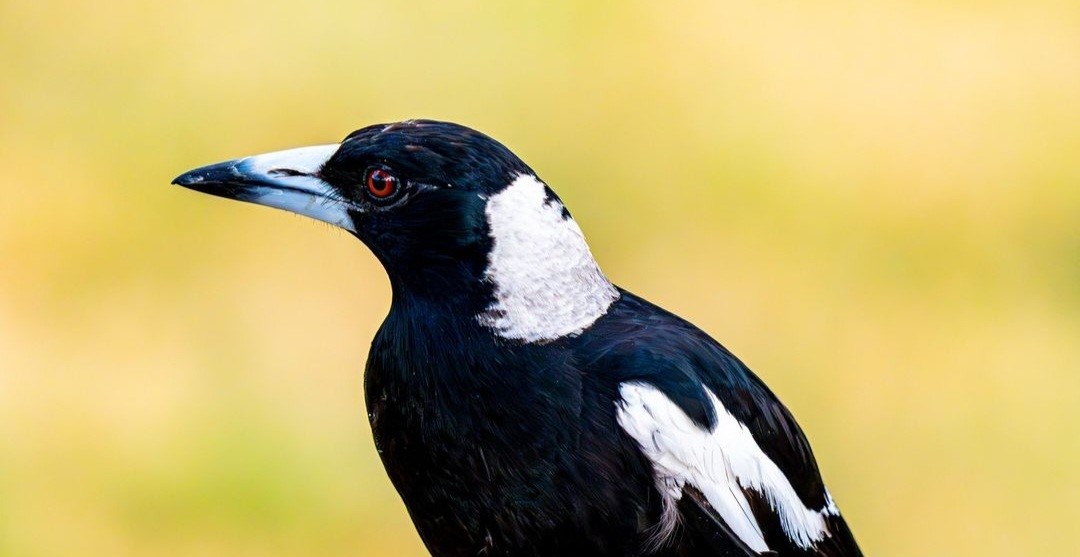
Wild magpie bird in Australian garden

We have magpies around our new home in the country, but they are aloof and independent. They don’t drink from the bird bath. Or follow us on the lawn mower like the butcher birds do, feasting on easy meals of crickets and tiny lizards.

When we moved into their territory, we were glad to find the magpies here are not in the small minority who swoop people they don’t know during nesting season … because it was nesting season.

Magpies can apparently recognise at least 500 different people. So we walked around with uncovered faces so they’d get to know us. And they’ve ignored us ever since.

Maybe country magpies are just too busy. Their city counterparts will give you the time of day on the back deck.

At my parent’s house in the city suburbs, magpies share their mornings.

Mr and Mrs Maggie know once the jug is set to boil for coffee, it’s time to make meaningful eye contact through the back window. A tiny portion of mince will be provided.

Mrs Maggie (females are mottled black and white behind their neck) knows the mince is kept in the fridge. There was that one morning when the screen door hadn’t closed, so she popped in and sat on the fridge, tapping a toe impatiently.

Magpies are known to live to 25 years, and Mr and Mrs Maggie are at least that.

My parents still remember the initial privilege of Mr and Mrs Maggie first introducing a fledgling nearly three decades ago. They’ve met a new fledgling every year since.

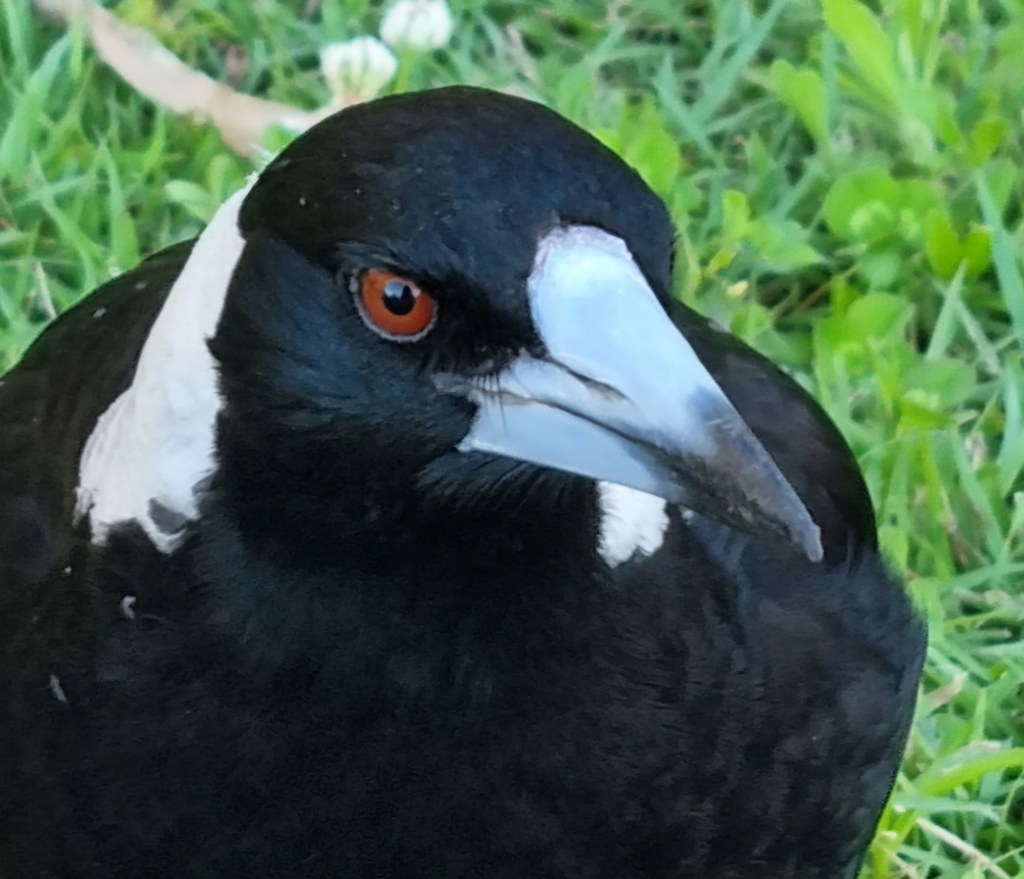
Australian wild magpie bird in garden

Each year, before the new chick arrives, there’s a gruesome period when Mr Maggie drives the adolescent chick from the territory. Many times, he’s flipped a reluctant son over on his back, with a peck that can draw blood.

One year, a departing son had the original idea of coming to the front door and knocking, while his parents were out the back. Kudos for ingenuity, but my mum and dad reinforced the wishes of Mr Maggie – it was time for the son to search for a home of his own.

Raising a fledgling is quite the commitment for magpie parents. For several months after leaving the nest, chicks need instruction on finding food, flying, and social etiquette.

It takes two adult birds to raise each fledgling. Mr and Mrs Maggie consistently raise one chick each year. Except for that wet and productive season, when grubs and earthworms must have been prolific. Mr and Mrs Maggie knew it would be a favourable season. They allowed their adolescent daughter to stay as an ‘Aunt’. That year, the three adults worked together to raise two fledglings.

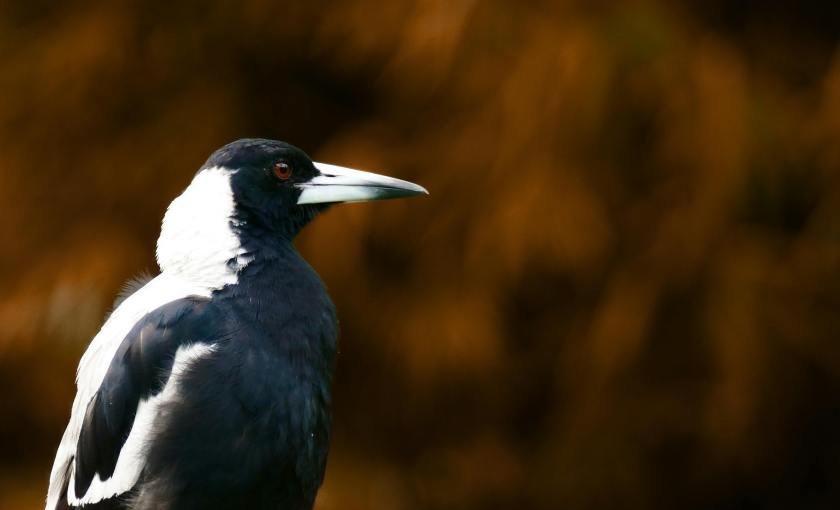
Australian magpie bird in bush

Magpies have many of the same neurotransmitters as we do – including dopamine, serotonin, and oxytocin. They experience emotions, including affection, playfulness, grief, and deceit. They play hide-and-seek like a five-year-old child.

Mr and Mrs Maggie deserve a huge amount of respect. They are within the 10% of magpies who reproduce in any year.

Only 25% of magpies will have the opportunity to raise a chick during their lifetime. This is due to the difficulty of finding a long-term partner and suitable territory. Also vital is the communication skills needed to form working relationships with magpies from neighbouring territories. This cooperation allows joint defence against outside threats such as eagles, goannas, and cats.

Today, my mum rang in tears. Mr and Mrs Maggie haven’t been seen for a week.

A great flock of white cockatoos, with all their screeching and chaos, had taken up in the small park next door.

We are all hoping that normality soon returns. That tomorrow, after seeing the jug set to boil, Mr and Mrs Maggie perch on the back rail, make eye contact, and ask for a breakfast treat.

Next time you see a magpie who’s willing to give you the time of day, remember they could be 30 years old, with wisdom and life experience. Remember, they’re intelligent and emotional. With highly refined communication skills.

Remember to say “Oooogle oooogle woooogle oooogle.”

Wild Australian magpie in garden with two lorikeets
Mr Maggie injured a leg 10 years ago, but he’s still doing well

References:
Podcasts
https://www.abc.net.au/listen/programs/conversations/talking-magpies-grieving-tawny-frogmouths-and-canny-galahs/103170988?utm_content=link&utm_medium=content_shared
https://www.tunefm.net/2024/02/02/une-emeritus-professor-gisela-kaplan-named-honorary-member-of-the-order-of-australia/
https://www.everand.com/podcast/590594548/What-makes-Australian-birds-so-smart-Gisela-Kaplan-Rebroadcast
Book
Australian Magpie: Biology and behaviour of an unusual songbird, Prof Gisela Kaplan, 2010

Cohabitating with nature

After my panicked phone call, the snake-catcher turned up – in shorts and thongs.

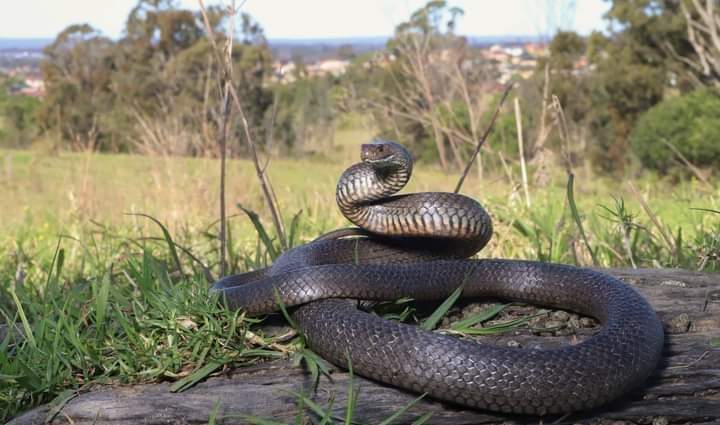
“I thought it would be a tree snake,” he said, looking at the photo I’d snapped of its disappearing tail an hour earlier – after it had slithered past my bare feet. “But that’s an Eastern Brown. I’ve never seen one around here.”

I checked in with my nearest neighbour. “Oh, really?” she said. “An Eastern Brown? I don’t remember the last time we saw one of those.”

Eastern Browns are the second deadliest snake in the world. I hope it’s gone from beneath my back stairs.

“The only way to know for sure it’s gone is to pull apart the whole staircase,” the snake-catcher said, helpfully.

That would be a full-day’s work. Plus, as Hubby estimated, three more days to put the staircase back together.

“You can live with a snake around,” said the snake catcher, “just be careful where you put your feet.”

A friend asked that night if I’d totally freaked out. I hadn’t, not immediately. Time had stood still. Then, after both the long, silent moment, and the long, silent snake, had passed me by, I’d screamed. Then, gasping, and with shaking fingers, frantically and repeatedly tried to send a text off to hubby who was slashing grass down by the dam.

I’d read that if a snake approaches you, stand still and let it pass. Ironically, in my frozen panic I’d done just that. The snake had flicked its tongue, tasted my presence in the air, then languorously turned away. Its scaly shimmer slipped soundlessly beneath the wooden step, right by my feet. I finally breathed again, into the silence. Silence, like nothing out of the ordinary had just happened.

“What are you going to do now? Do you regret moving to the bush?” My friend questioned that night, perhaps horrified and fascinated because she, too, had recently moved from the city.

“Well, I wish my husband would keep the back door closed!”

Hubby had tried to soothe me, saying snakes don’t go inside.

They bloody might. Why wouldn’t they, when it’s cool and quiet in the middle of the day. When we’re using the mower on the back lawn, stamping around and dragging pot plants about?

My husband’s behaviour didn’t change at all. Still walking around in bare feet. Me, in comparison, for the first whole week ‘post-snake’, chose knee-high gumboots to accessorise my usual sarong when venturing down the stairs to the spa at night. I also spent three days stomping up and down the stairs in work boots and jeans, generally creating as much ruckus as possible.

A week later and we hadn’t seen the snake again. I sought the advice of the experts on the Australian Snake Identification, Education + Advocacy Facebook group.

“Is it likely the snake has moved on?”

“To be sure, you should replace the wooden deck and staircase with concrete,” was the advice. “You have chickens which attract rodents, which attract snakes. You have water, frogs, and a safe space for snakes to hide and hunt. But remember, Eastern Browns don’t like movement. They’ll get out of your way before you even know they’re there. Just look down before you step down. It is possible to cohabitate with them.”

Cohabitate with the second deadliest snake in the world?

Remodelling the back deck and stairs IS on the renovation list – somewhere between the priorities of fencing, more water tanks, retaining walls and building another shed.

I now know snakes are definitely around, instead of possibly around. I’ve also learnt they don’t chase you. Just look out for them, and don’t step on them.

Life continued for another week.

I now look down before I step down. I’ve calmed down. I’ve reverted to wearing thongs outside.

Then, yesterday, as I looked down, a scaly scurry. Something half-seen slipped from the sunny step beneath my feet. A huge blue tongue lizard.

Another question for the Facebook snake advocacy group.

“There’s a big blue tongue living right where the Eastern Brown was. Does this mean the snake has moved on?”

“Possibly,” was the reply, “but not necessarily. Eastern Browns and Blue Tongues can cohabitate quite happily.”

I may be cohabitating with a snake. And a Blue Tongue.

Photo credit: Shane Walsh, who takes wonderful photos and advocates for cohabitating with wildlife.

Notes:

Even if we are cohabitating, we are never going to be friends. There’s a snake bite kit handy, just in case.

For international readers, ‘thongs’ in Australia generally means ‘flip flops’.

Meeting the new house

I knew immediately I needed to slow down. Slow down to meet the house on its own vibration. Bringing my big-city buzz through the door would stop me connecting with this quiet, tired cottage that has nestled here amongst established eucalypts for forty years.

Driving those few hours to our new property, to finally move in, I was anxious to check the reality of my new home and country life against the preconceptions I’d developed. Will I feel safe in the country? Will I miss city cafes, bootcamps, walking to the shops and other conveniences? Will I be overwhelmed by the renovations required and the reality of looking after country acres? Will I still love this house or will this all be a terrible mistake?

I’d thought of various ways to introduce myself to our new home with more ceremony than simply walking through the door. I could light a sage smudge stick and waft pungent cleansing smoke through the rooms and into every corner, clearing old energy to make way for new beginnings. I could rub some soil from the bank of the dam under my armpits and sprinkling it into the water, to announce my arrival. (An idea inspired by ABC TV’s Back to Nature, https://www.screenaustralia.gov.au/the-screen-guide/t/back-to-nature-2021/39240/ ) I could say hello to the spirits of the traditional owners and let them know my intention is to care for land and wildlife, to be respectful.

I drive along those final few undulating kilometres of gravel road, skirting the national park, threading between huge gum trees in an area listed as critical koala habitat. As I round the last bend and glimpse the rusty A-frame roof and views down the valley, the house greets me like a sigh of relief. I know this is where I’m meant to be.

I also know my convoluted plans to announce my arrival are not necessary. My smudge stick will stay in my suitcase, the soil at the dam, the traditional owners undisturbed.

This cottage, on its ten acres, has witnessed floods, drought, and the terrible bushfires of 2019-2020 when almost the entire East Coast of Australia was on fire. Who am I to land here from the big city with my big ideas, to come in as the new owner and start pushing things around? I’ll move slowly, get to know the land over time. The patterns, the seasons. I have much to learn.

Getting to know the property began simply that first day. Cleaning. My husband and I rolled up the ancient, filthy carpet and scrubbed the concrete slab beneath. I started cleaning high inside the house and worked my way lower. Vacuuming what I could reach of the vaulted ceiling, squeegee mopping the walls, then the windows and floors.

We unpacked the sound system and learned of the beautiful acoustics provided by the solid walls and soaring ceilings.

My husband had arrived at our new home yesterday, while I packed up the last of our city belongings. I asked him how he’d slept last night on a mattress on the floor. He hadn’t slept well. Kept awake by rustlings in the cupboards, scurryings in the attic, and scamperings along the gutters and over the corrugated iron roof. I was glad our furniture had been delivered. Although the bed was one of the few items unpacked, at least tonight we will be sleeping up off the floor. After vacuuming droppings from cupboards and corners today, I knew we were not the only occupants of the house.

Exhausted we flopped onto the bed. So far there’s no scamperings or scurryings. We chat about how different the night sounds in the country. No sirens. No drunk people stumbling home from the pub, post COVID lockdown. There’s no hoons in loud cars. No neighbours dragging their Thursday night bins out.

So what can we hear? Frogs. An owl. Crickets. Our heartbeats. And nothing at all.

Time to treechange

A treechange is what I’ve wanted for twenty years. I’m now plagued by doubts, but it’s too late to go back.

The last of the furniture was carted away by removalists earlier this morning. All that’s left is a scatter of half-used cleaning products in the centre of the loungeroom. After hours of wiping and scrubbing, the house glows with love and care, ready for tomorrow when the new owners take possession.

My husband has gone on ahead with the removalists to our new property, a few hours away in the country. I’m here alone, except for the cat, Charlie, who anxiously follows me from room to room.

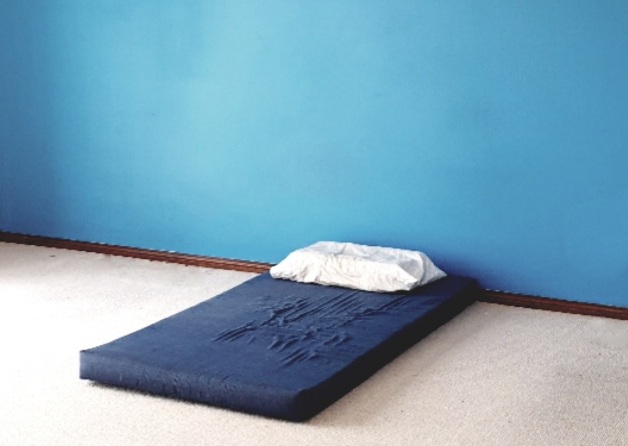
I drag the old single mattress which sags in the centre to the bedroom wall, where this morning our king-size ensemble was located. The removalists have accidentally taken the vacuum-packed sheets and doona, so I’ll be sleeping on the bare mattress in my clothes with my bathrobe over the top to try and stay warm.

This is my last night in what has been our home in the city for ten years. It’s also the last night where meals can be home delivered, so I treat myself ordering Chinese online.

No longer filled with our furniture, paintings, books, and belongings, the house already feels less ours. Yet I’m still here, clinging to this out-dated version of what home is.

What will be our new home is not, as yet, a home. I barely remember it as our only inspection was more than three months ago. I’m a little scared of the house – I recall dust, musty and perhaps mousy smells, spider webs, filthy carpets, imposingly towering raked ceilings, and … ‘good bones’, ‘potential’.

I imagine the new house sitting silently awaiting me, windows murky, accessible via dirt road and far from the lights, sirens, and city busyness I’m accustomed to.

And this is the reason I’m here alone tonight.

Today I exaggerated the need to stay and further tidy up our city home, ready for our purchasers. Secretly, I wanted my husband to go before me to tame the spectre of the new country house, and the wild unknown I’ve built it up in my mind to be.

‘Will you be scared, staying in the new house by yourself?’ I’d asked my husband this morning.

‘Hah, don’t be silly.’

I text him now, ‘How’s it going?’

He replies: ‘It’s raining and the lights are off. I’m standing, walking, looking, listening and learning.’

I picture this, him becoming aquainted with our new house. His senses stretching as an aura around him in the dark. Alert to each sound. The creaks and groans as the house settles for the night.

Will our new house nurture, support and inspire us? Will I come to love it? Will it become a home?

Tomorrow, the house and I will be introduced as my husband will have already been there twenty-four hours. He’ll have some observations and stories to share.

My Chinese meal arrives, and I settle on the mattress, the cat purring and curled against my leg. Just for five minutes I cling to the normality and stability this home has provided.

I’m apprehensive moving to a community where we know no-one, to look after a patch of land we know nothing about. To a country house beyond the reach of town water and sewer services. What has been a long- held dream is now very real.

I wonder if my husband has completed a circuit of the building, explored outside as well as every room? Does he hear the rain on the roof flowing into the water tank, or are the gutters choked with leaves and overflowing – the first indication of a house more neglected than we’d anticipated. There’s so much for this house to reveal.

How’s my husband feeling there alone? Does he hold fears? Overwhelm? Regrets?

Then another text arrives from him.

‘I think we are going to fill this house very well,’ he says.

And my oppressive blanket of uncertainty immediately feels lighter. After an evening of second guessing our treechange decision, I’m again looking forward to our adventure together, which for me, starts tomorrow when Charlie and I drive to our new country home.