
#Photography #Gardening
Tag: Garden
Feathered families – friendships with magpies
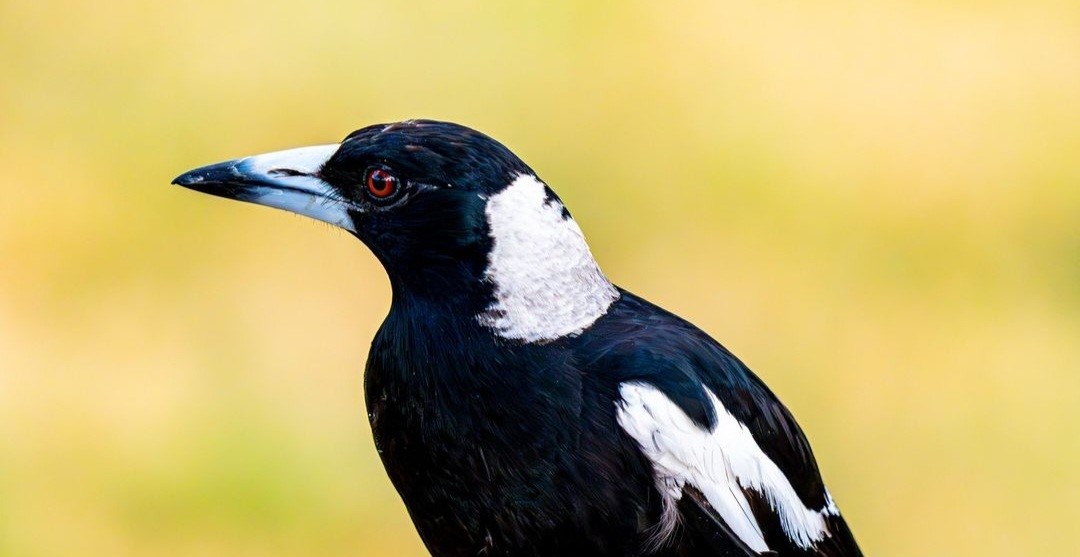
Instead of making my morning coffee as I lay in the caravan bed, my husband was lingering outside the open door.
Was he waiting to talk to one of our camping friends returning from a walk?
Suddenly, he crooned with a sing-song lilt, “Oooogle oooogle woooogle oooogle.” And I knew he was talking to … a magpie.
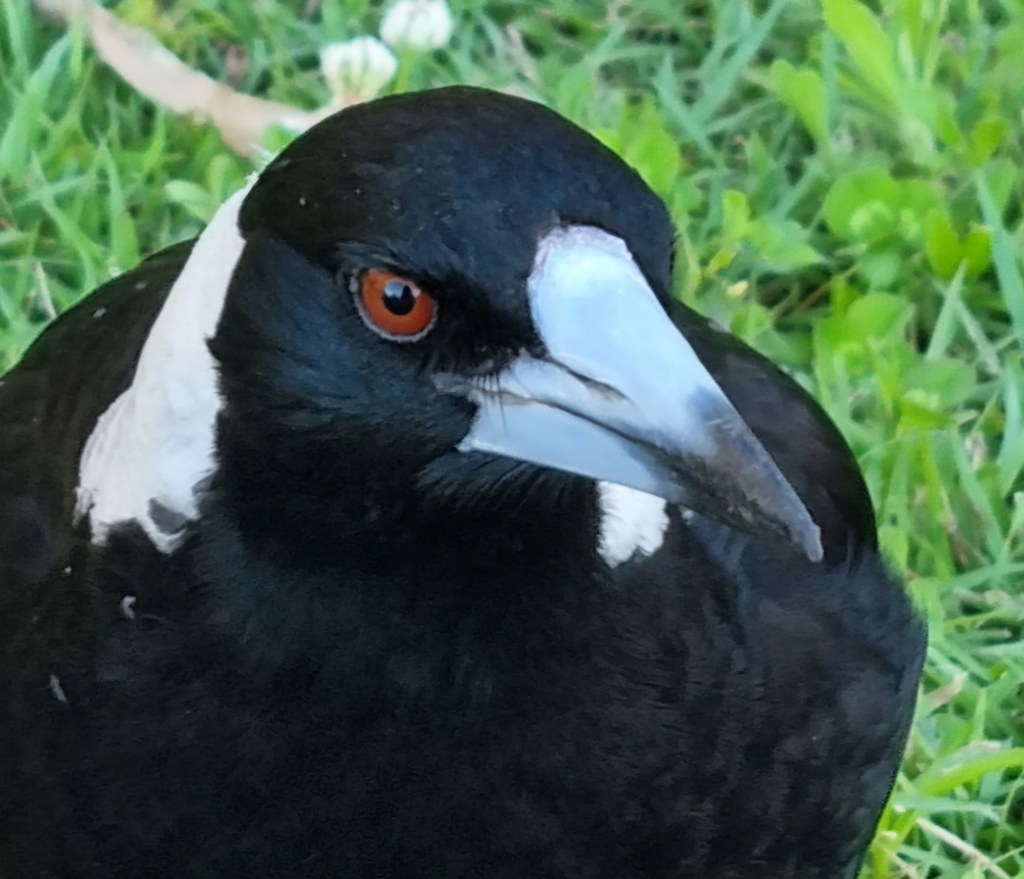
We have magpies around our new home in the country, but they are aloof and independent. They don’t drink from the bird bath. Or follow us on the lawn mower like the butcher birds do, feasting on easy meals of crickets and tiny lizards.
When we moved into their territory, we were glad to find the magpies here are not in the small minority who swoop people they don’t know during nesting season … because it was nesting season.
Magpies can apparently recognise at least 500 different people. So we walked around with uncovered faces so they’d get to know us. And they’ve ignored us ever since.
Maybe country magpies are just too busy. Their city counterparts will give you the time of day on the back deck.
At my parent’s house in the city suburbs, magpies share their mornings.
Mr and Mrs Maggie know once the jug is set to boil for coffee, it’s time to make meaningful eye contact through the back window. A tiny portion of mince will be provided.
Mrs Maggie (females are mottled black and white behind their neck) knows the mince is kept in the fridge. There was that one morning when the screen door hadn’t closed, so she popped in and sat on the fridge, tapping a toe impatiently.
Magpies are known to live to 25 years, and Mr and Mrs Maggie are at least that.
My parents still remember the initial privilege of Mr and Mrs Maggie first introducing a fledgling nearly three decades ago. They’ve met a new fledgling every year since.

Each year, before the new chick arrives, there’s a gruesome period when Mr Maggie drives the adolescent chick from the territory. Many times, he’s flipped a reluctant son over on his back, with a peck that can draw blood.
One year, a departing son had the original idea of coming to the front door and knocking, while his parents were out the back. Kudos for ingenuity, but my mum and dad reinforced the wishes of Mr Maggie – it was time for the son to search for a home of his own.
Raising a fledgling is quite the commitment for magpie parents. For several months after leaving the nest, chicks need instruction on finding food, flying, and social etiquette.
It takes two adult birds to raise each fledgling. Mr and Mrs Maggie consistently raise one chick each year. Except for that wet and productive season, when grubs and earthworms must have been prolific. Mr and Mrs Maggie knew it would be a favourable season. They allowed their adolescent daughter to stay as an ‘Aunt’. That year, the three adults worked together to raise two fledglings.
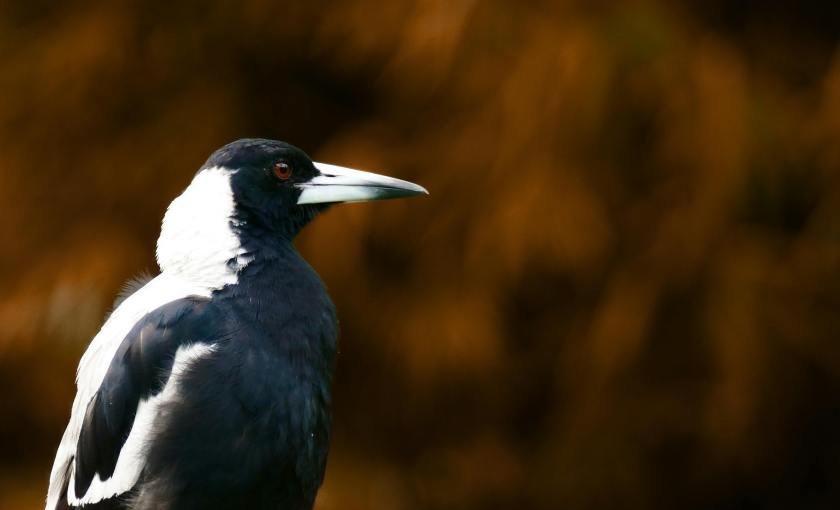
Magpies have many of the same neurotransmitters as we do – including dopamine, serotonin, and oxytocin. They experience emotions, including affection, playfulness, grief, and deceit. They play hide-and-seek like a five-year-old child.
Mr and Mrs Maggie deserve a huge amount of respect. They are within the 10% of magpies who reproduce in any year.
Only 25% of magpies will have the opportunity to raise a chick during their lifetime. This is due to the difficulty of finding a long-term partner and suitable territory. Also vital is the communication skills needed to form working relationships with magpies from neighbouring territories. This cooperation allows joint defence against outside threats such as eagles, goannas, and cats.
Today, my mum rang in tears. Mr and Mrs Maggie haven’t been seen for a week.
A great flock of white cockatoos, with all their screeching and chaos, had taken up in the small park next door.
We are all hoping that normality soon returns. That tomorrow, after seeing the jug set to boil, Mr and Mrs Maggie perch on the back rail, make eye contact, and ask for a breakfast treat.
Next time you see a magpie who’s willing to give you the time of day, remember they could be 30 years old, with wisdom and life experience. Remember, they’re intelligent and emotional. With highly refined communication skills.
Remember to say “Oooogle oooogle woooogle oooogle.”

Photo credits:
Featured image by Tim Phillips on Instagram @timbeyan. Pic 3 is from Pexels by Vlad Kutepov
References:
Podcasts
https://www.abc.net.au/listen/programs/conversations/talking-magpies-grieving-tawny-frogmouths-and-canny-galahs/103170988?utm_content=link&utm_medium=content_shared
https://www.tunefm.net/2024/02/02/une-emeritus-professor-gisela-kaplan-named-honorary-member-of-the-order-of-australia/
https://www.everand.com/podcast/590594548/What-makes-Australian-birds-so-smart-Gisela-Kaplan-Rebroadcast
Book
Australian Magpie: Biology and behaviour of an unusual songbird, Prof Gisela Kaplan, 2010
Bird of paradise #WordlessWednesday
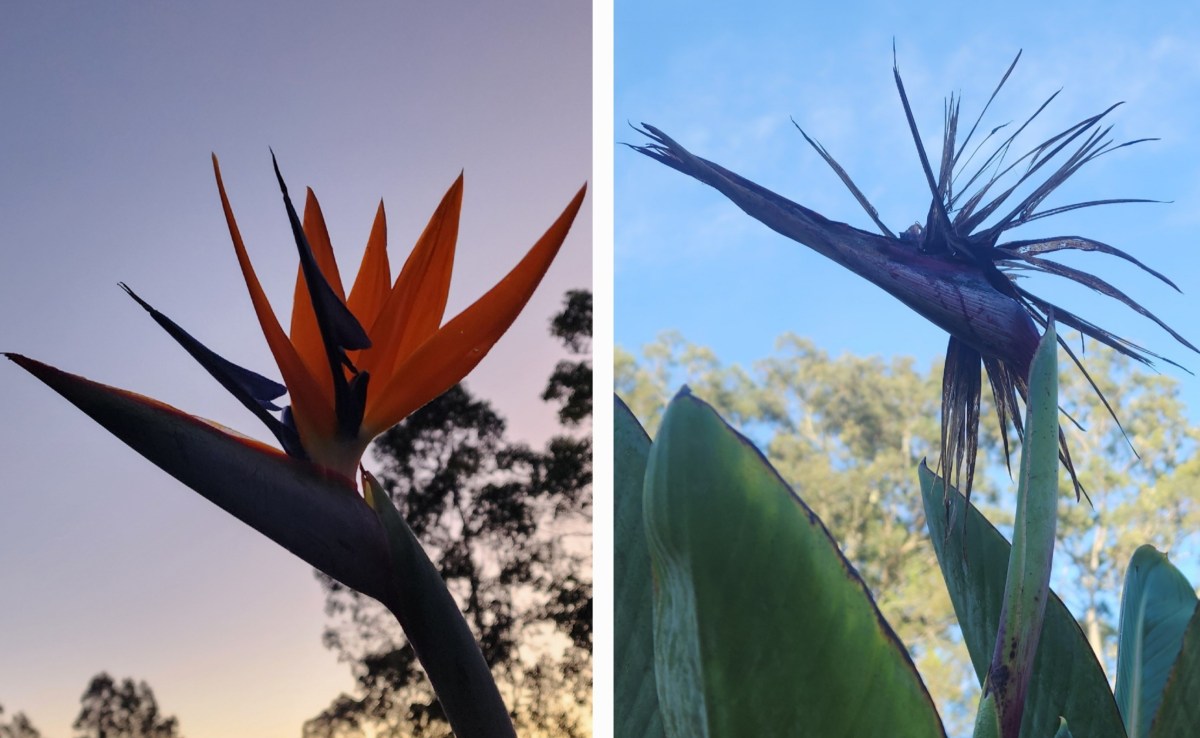
#Photography
Spring has me green with envy
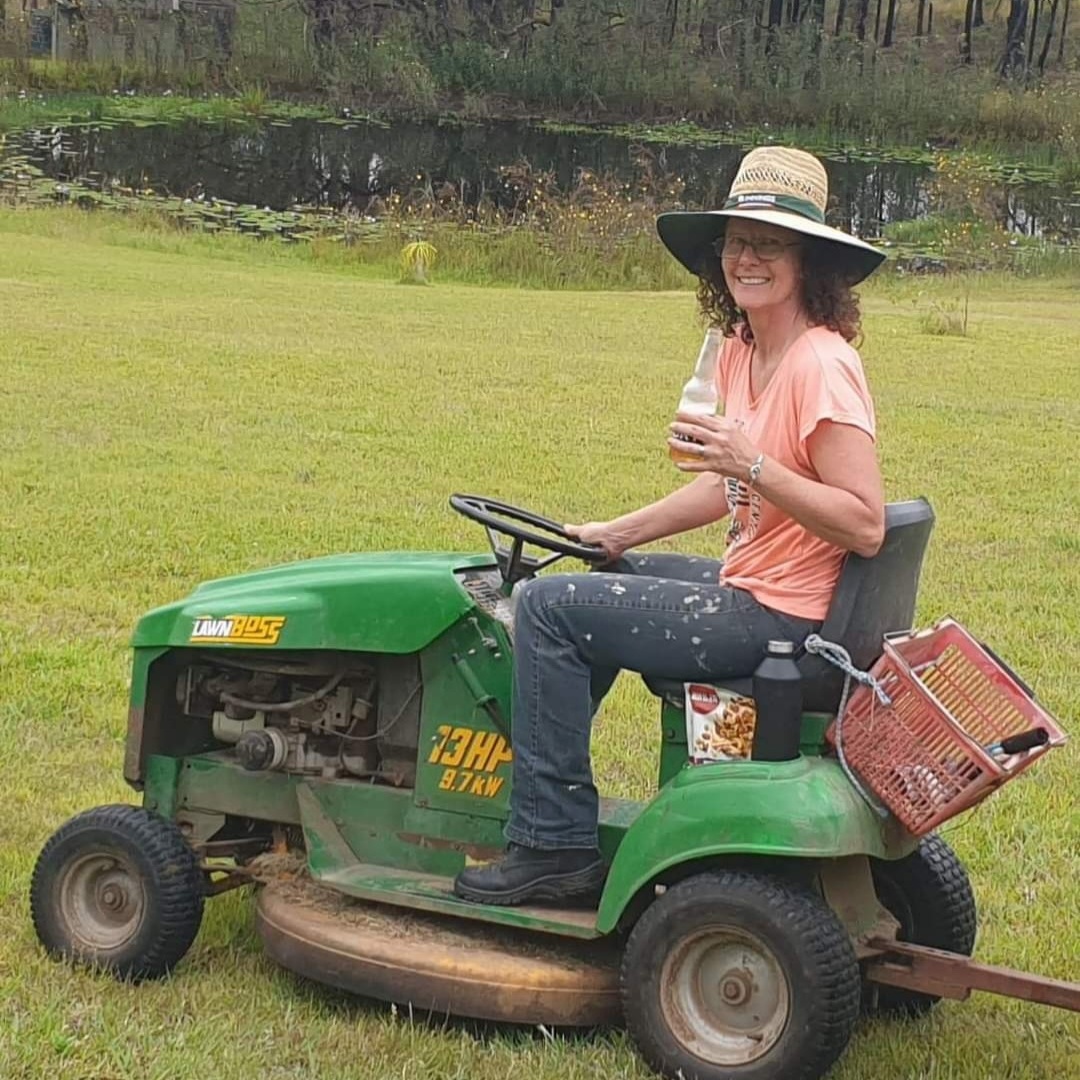
The Spring dawn of gentle sunrise and birdsong was torn apart by duelling internal combustion engines. The neighbours and I, ride-on mowers revving, trying to tame lawns and paddocks before a week of predicted rain.
If it was a ride-on mower duel, our neighbours would have won the morning, with their top-of-the-range, low centre-of-gravity, turn-on-a-tussock, purring machine. A far-flung second was me, astride our ancient, fume-belching, muffler-missing dinosaur. One of my legs held akimbo for balance on tippy slopes, one hand on the wheel and the other holding myself in position. A cramp in my toe from stretching to reach the distant pedal, because the seat’s rusted in position as far back as possible due to years of long-legged men driving in circles.
I may have a mild case of Lawn Mower Envy. An emotion I’d never felt, or even knew existed, before our tree-change to the country.
Hubby may suffer Lawn Mower Envy more seriously than me – he’s the one who spends hours on maintenance. Keeping our mowers moving – forwards. I’ve been instructed to limit engaging reverse as it creates wear on one of the belts, and the clutch.
I’m grateful our mower has a drink holder. Cheers to the person who first thought of including that. Ours usually holds a beer, but this morning, it’s coffee. It is only 7am. Our neighbours’ mower probably has a drinks holder too, even an insulated lunch chiller. Apparently, the expensive ones do.
Our main mower is Coxie, the Lawn Boss. He came with the property. He’s a long-time hard-worker, overdue for retirement. Yet he still battles through most of our heavy mowing.
We recently bought another second-hand, though much newer, ride-on called Fergie. Fergie as in the tractor manufacturer, Massey Fergusson. We thought that would mean she’s tough and reliable. Perfect for taming our tufts. Alas, she spends a fair amount of time up on the repair ramps in the shed, receiving Hubby’s ministrations.
Fergie may be much younger, shiny red, with a bigger motor, twin blades and a wider cut, but something to do with her gearing means she shirks the heavy work. The heavy work is along the back boundary where the tussocks are toughest, thickly interspersed with stiff-stemmed weeds that relentlessly march in from the poorly maintained adjoining property.

Today, with Hubby in the seat, heading towards the back boundary, Fergie blew a belt. (I promise I haven’t been overly engaging her reverse.) Fergie was left immobilised between the mango trees at the bottom of the slope.
The only solution was to hope Coxie could tow Fergie home. Poor, ancient Coxie – wheels spinning, Hubby and I pushing. All three of us groaning. But we managed. We dragged Fergie up the hill and back to the shed for her next round of coddling.
I don’t know if the neighbours saw any of that, or if they even knew they and I were having a lawn-mower duel.
Perhaps they can’t hear me over the classical music playing through their headphones, as they sip champagne from their drinks holder, and nibble chilled canapes from their on-board insulated lunch box.
